Home & framing
How to Choose the Right Size Art for Your Wall
The simple rules designers use to size art above a sofa, bed, console or desk, with real measurements, plus how portrait sizes from 8×10" to 24×36" work in actual rooms.
By the Pup Prints team 4 min read

The most common art mistake isn't the wrong style or the wrong frame. It's the wrong size. Art that's too small floats awkwardly on a big wall and looks like an afterthought. Art that's too big crowds a small room. Fortunately, a few simple rules get you to the right answer almost every time.
The two-thirds rule
When art hangs above furniture, aim for it to be about two-thirds to three-quarters the width of the furniture below it. Above an 84-inch sofa, that's a piece (or a group of pieces) roughly 56 to 63 inches wide. Above a 60-inch dresser, it's about 40 to 45 inches.
That's wider than most people expect, which is why one small print above a sofa so often looks lost. If a single piece can't reach that width, a pair or a group can. The rule applies to the whole arrangement, gaps included.
The eye-level rule
Galleries usually hang art so its center sits about 57 to 60 inches from the floor, roughly average eye level. At home, that's a good starting point for art on an open wall. Above furniture, the furniture sets the height instead: leave about 6 to 10 inches between the top of the sofa or headboard and the bottom of the art, so the two feel connected rather than floating separately.
A note on portraits
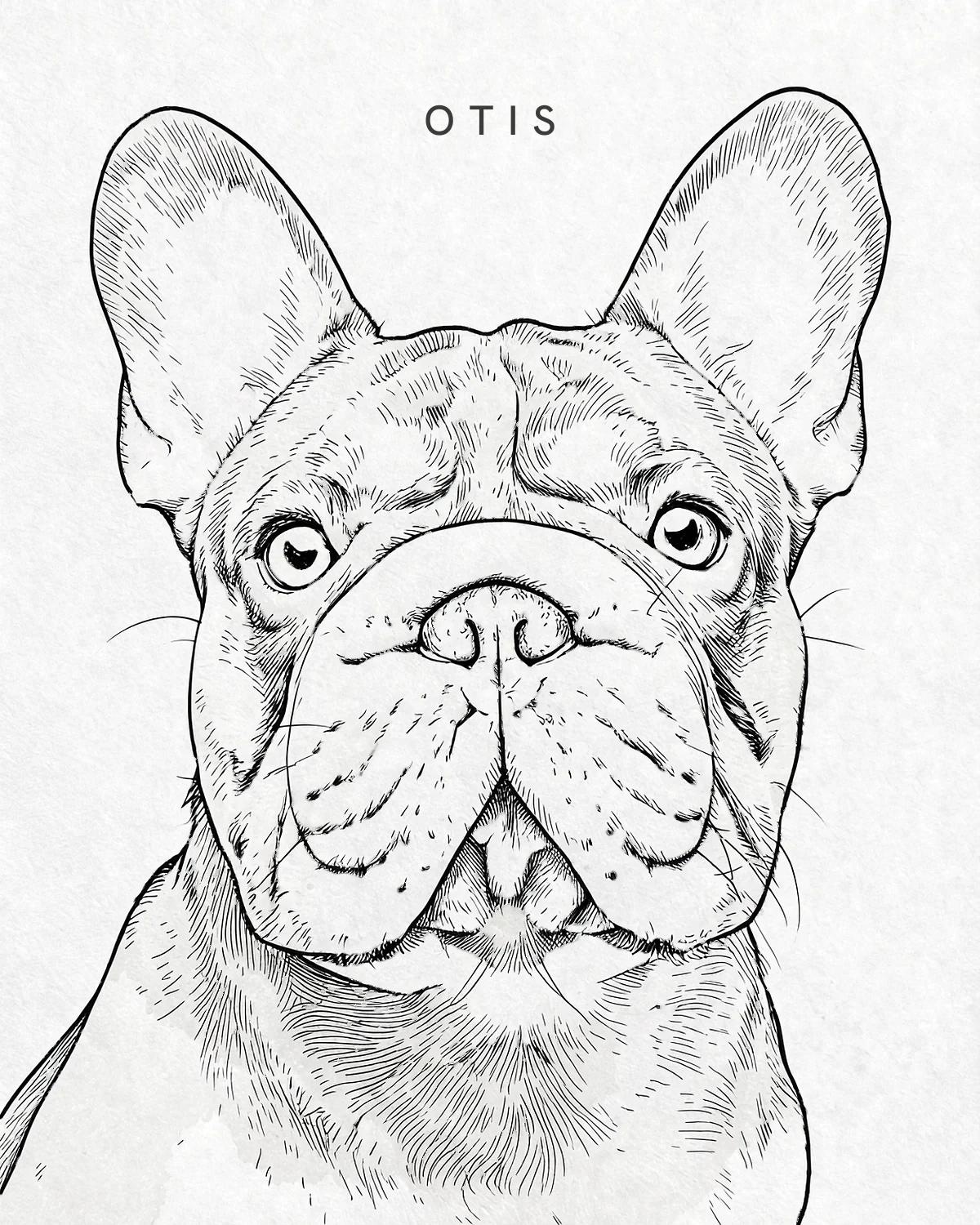
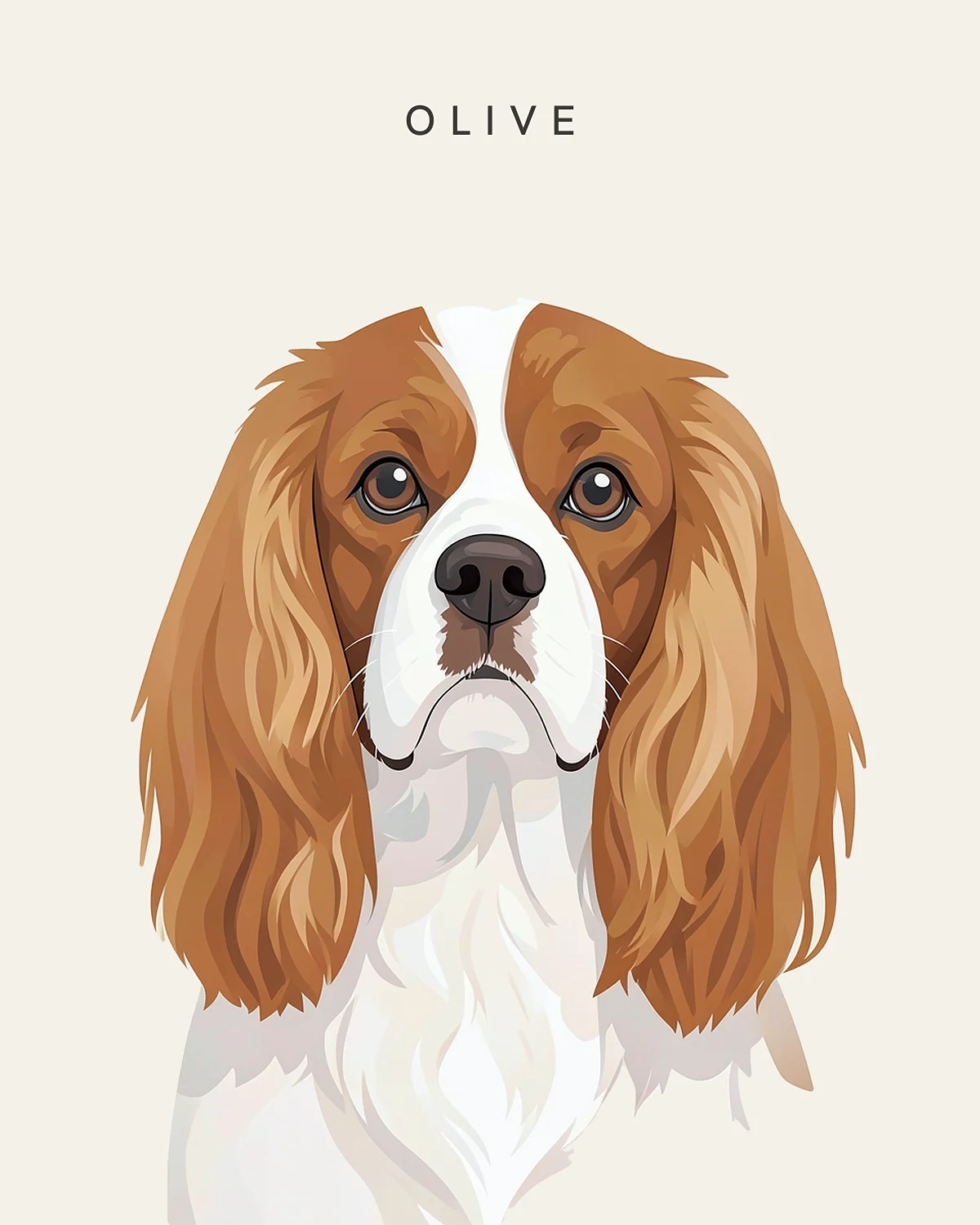
Dog portraits are vertical: taller than they are wide. Above a long sofa, a single portrait becomes a focal point rather than filling the width, and that can look great on a tall wall or flanked by lamps or plants. If you want to fill the width, hang two or three portraits side by side. It's also a lovely way to display more than one dog, in matching styles and sizes.
Our sizes, and where they work
| Size | Approx. cm | Available as | Works well |
|---|---|---|---|
| 8×10" | 20 × 25 cm | canvas, framed, print | Desks, bookshelves, bedside tables and gallery walls |
| 12×16" | 30 × 41 cm | canvas, framed, print | Small walls, hallways, above a desk, or hung in pairs |
| 16×20" | 41 × 51 cm | canvas, framed | Above a console or nightstand; a strong single piece on a medium wall |
| 18×24" | 46 × 61 cm | canvas, framed, print | Above a dresser or a small sofa, or as a pair above a bed |
| 24×36" | 61 × 91 cm | canvas, framed, print | A statement piece above a sofa, bed or fireplace, or on a large open wall |
Room by room
Above a sofa
Most sofas are somewhere between 72 and 90 inches wide. For a single portrait, go big: a 24×36" canvas or framed print. To fill more of the width, try three 16×20" portraits in a row with 3 inches between them. They span about 54 inches, close to two-thirds of an 84-inch sofa.
Above a bed
A queen bed is about 60 inches wide, so two-thirds is roughly 40 inches. A 24×36" portrait centered above the headboard makes a calm focal point; a pair of 18×24" pieces with a 4-inch gap spans almost exactly 40 inches.
Above a console, dresser or fireplace
Consoles and dressers are often 36 to 60 inches wide, which suits a single 16×20" to 24×36" piece. A mantel is also a great place to lean a framed portrait instead of hanging it, especially if you like to swap art seasonally.
Home office
Art above a desk is usually seen from close up, so 16×20" or 18×24" works well. On the desk itself, an 8×10" frame is perfect. A Charcoal portrait above a desk is, we'd argue, a productivity tool.
Hallways and stairs
Narrow spaces suit 12×16" pieces, or a vertical stack of 8×10"s. On a staircase, follow the angle of the stairs and keep each piece the same height above its step.
Gallery walls
Mix sizes from 8×10" up to 18×24", keep the gaps consistent (2 to 3 inches is typical), and stick to one or two frame colors for a calm, collected look. Lay everything out on the floor first, or tape paper templates to the wall.
The most common sizing mistakes
- Hanging too high. This is the big one. Art hung near the ceiling feels disconnected from the room. Bring it down toward eye level, or closer to the furniture beneath it.
- Going too small above furniture. A lone 8×10" above a sofa looks like it wandered off from somewhere else. Size up, or group several pieces.
- Forgetting the sight lines. Think about where the art is seen from: the doorway, the sofa, the bed. A piece seen from across the room needs more presence.
- Crowding. Art needs breathing room. Avoid squeezing a large piece between windows or right up against a corner.
Tricks for getting it right before you buy
- Tape it out. Mark the size on the wall with painter's tape or a sheet of paper and live with it for a day.
- When in doubt, go bigger. Art that's slightly too large almost always looks better than art that's slightly too small.
- Think about viewing distance. Pieces seen from across a room need to be bigger than pieces seen up close.
- Let the style guide you. Detailed styles like Line Drawing reward a closer look; bold styles like Oil and Charcoal read well from across the room.
Still deciding on a finish? Read canvas vs. framed print vs. poster. Ready to put it up? Here's how to hang it without wrecking your wall.