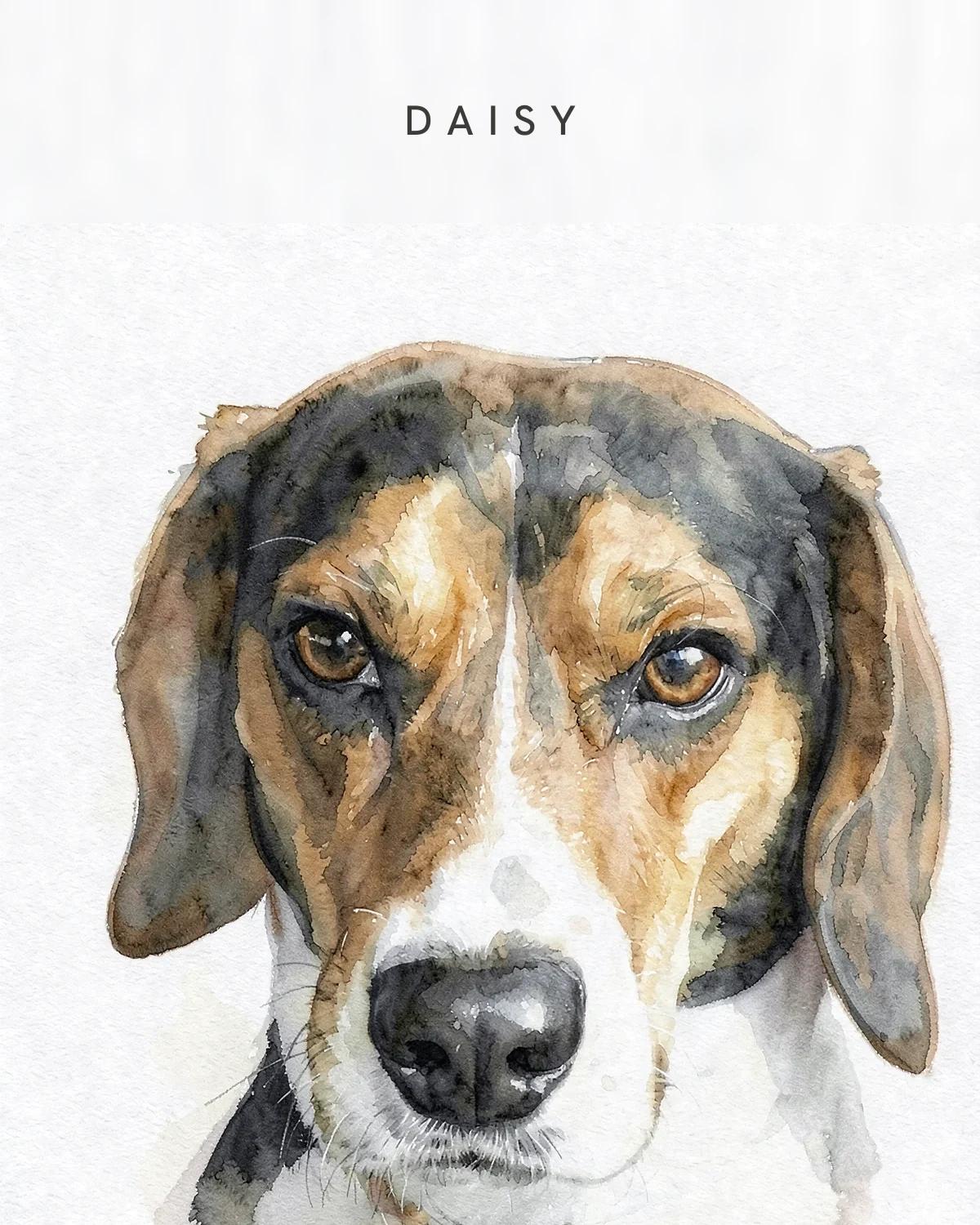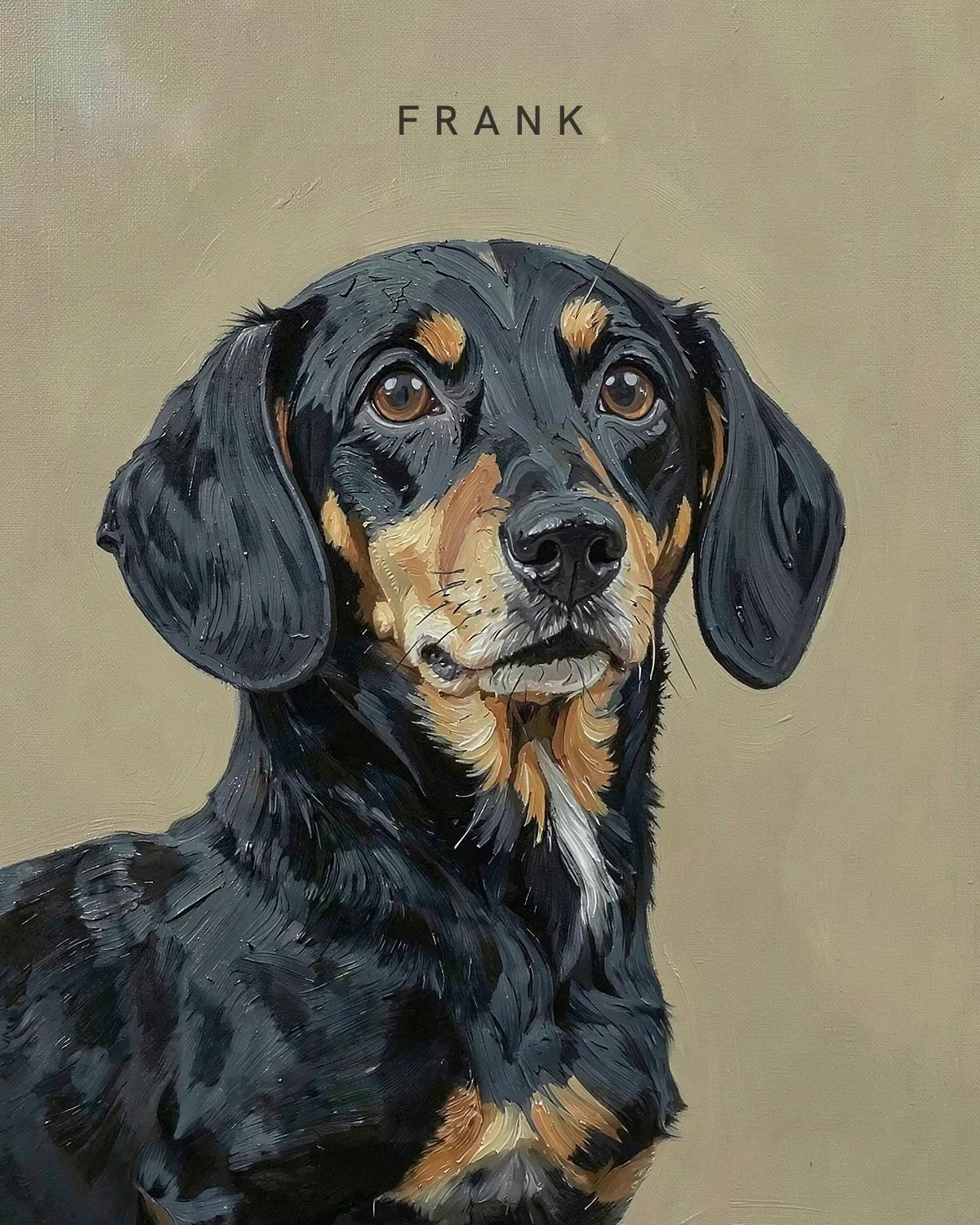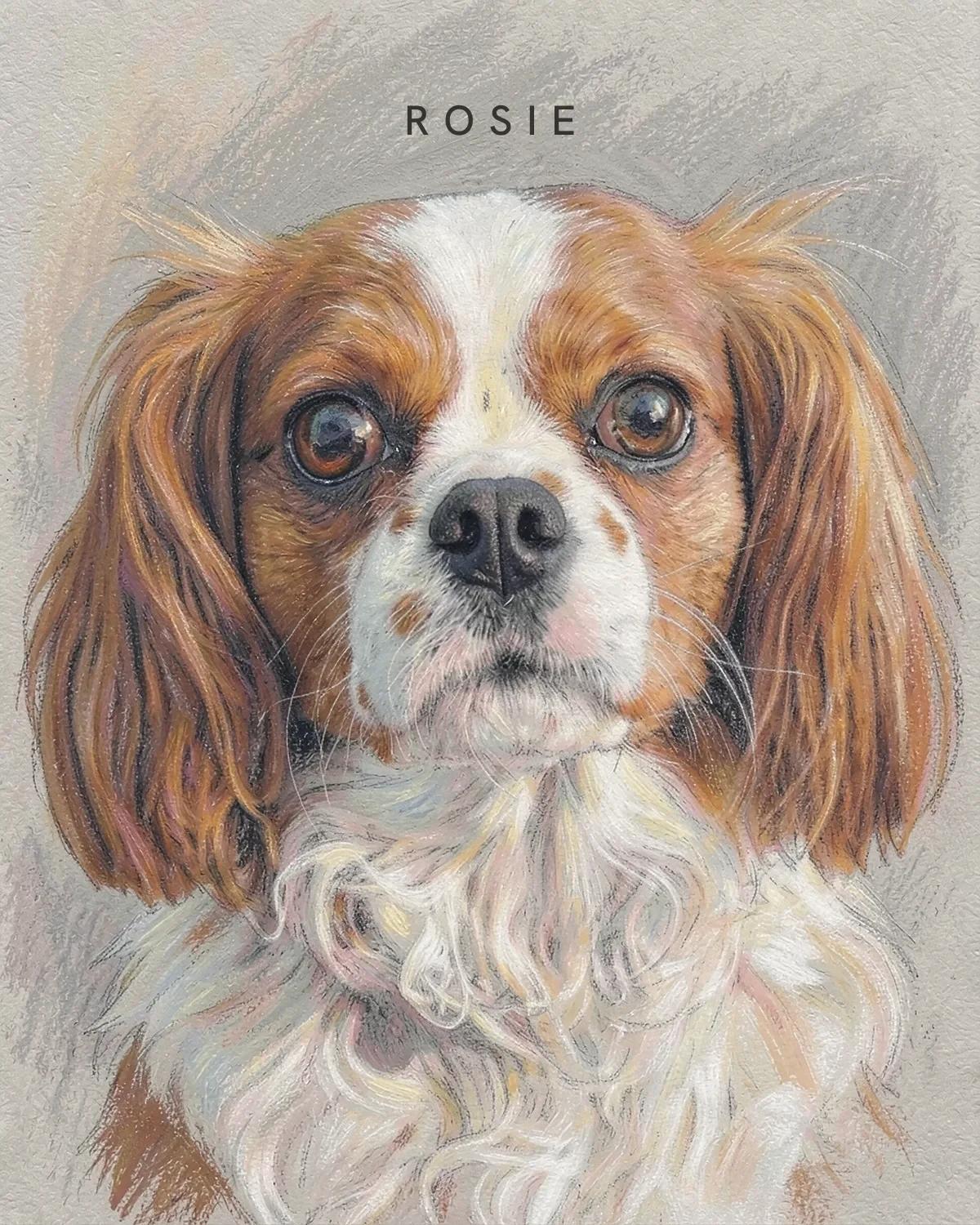
Pastel
All that fluff calls for the softest medium we have.
A tiny, foxy cloud of fluff with a big-dog attitude.
Upload a photo of your Pom to see the portrait.
Shown: an example Pastel portrait
Upload a photoPomeranians descend from much larger Spitz-type working dogs and take their name from Pomerania, a region on the Baltic coast. Queen Victoria fell for a small Pom in Italy in the 1880s and helped make the little ones fashionable in Britain. Today they're No. 19 on the AKC's 2025 list, still bold, bright and very much in charge.
Poms have a sweet, fox-like face with almond eyes, small pricked ears and a huge ruff of fluff around the neck. In photos, that coat can swallow the face, so the best portrait photos are crisp and close, with the eyes and ears clearly visible. Orange, cream, sable, black and parti coats all look lovely, and the fluff gives painterly styles wonderful texture. Thomas Gainsborough painted a Pomeranian in the 1770s, so a Pom in oil has precedent.
Yes. Texture is part of likeness, and painterly styles love a big coat. The key is a photo where the face is sharp and the eyes aren't buried in fur.
We'd start with Pastel: All that fluff calls for the softest medium we have. Watercolor is a close second: Orange and cream coats bloom in loose washes. You can try every style with your own photo and pick the one that looks most like your Pom.
A sharp, close photo in soft daylight, taken at your dog's eye level, is the foundation. For a Pom specifically: Find the face in the fluff. Brush the fur away from the eyes and shoot close enough that the face fills most of the frame. Floor level, always. Poms are tiny. Lie down so you're eye to eye.
Gallery Canvas from $59, Framed Print from $75, Fine Art Print from $35, Digital Portrait $29. US shipping is free on every order, and every print, framed print and canvas includes the hi-res digital file.